
Architecting Scalable Digital Ecosystems for Enterprise Environments
Wingskyline architects enterprise platform foundations that support multi-product ecosystems, complex integrations, and long-term digital growth — engineered for scalability, resilience, security, and operational continuity.
What “Platform” Means at Wingskyline
Not a collection of isolated features, but a durable digital foundation designed to support multiple applications, enterprise integrations, tenant models, operational governance, and future ecosystem expansion within a unified architectural framework.
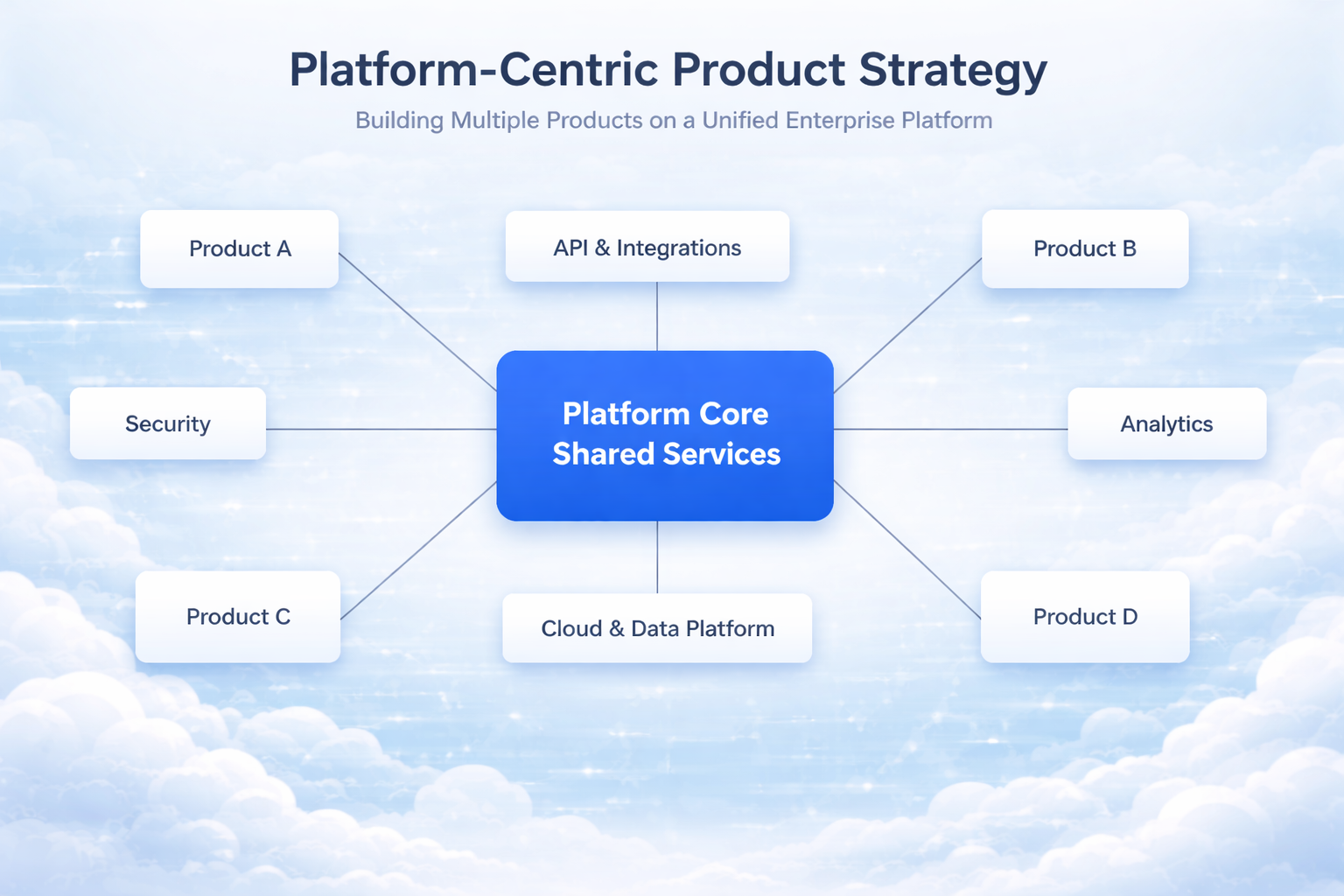
Platform-Centric Product Strategy
Platform development at Wingskyline is guided by long-horizon ecosystem thinking — engineered as a strategic foundation for multiple products, integrations, and business capabilities, allowing organizations to scale without repeated architectural disruption.
Designed to Evolve with Enterprise Growth
- Unified architecture models aligned to long-term product ecosystems
- Roadmap-driven platform engineering rather than reactive delivery cycles
- Structural continuity across expansion, modernization, and scale phases
- Foundational design that supports future services, products, and integrations
Core Platform Capabilities
Enterprise-grade engineering capabilities structured to deliver reliability, interoperability, security, and sustained operational performance at scale.
Multi-Tenant SaaS Architecture
Secure logical isolation with shared infrastructure efficiency, enabling tenant-specific configuration, identity separation, governance controls, and performance partitioning within a scalable operating model.
Cloud-Native Infrastructure
Containerized workloads, infrastructure-as-code provisioning, elastic scaling, and automated environment configuration to support consistency, speed, and operational stability across deployment landscapes.
Distributed Microservices
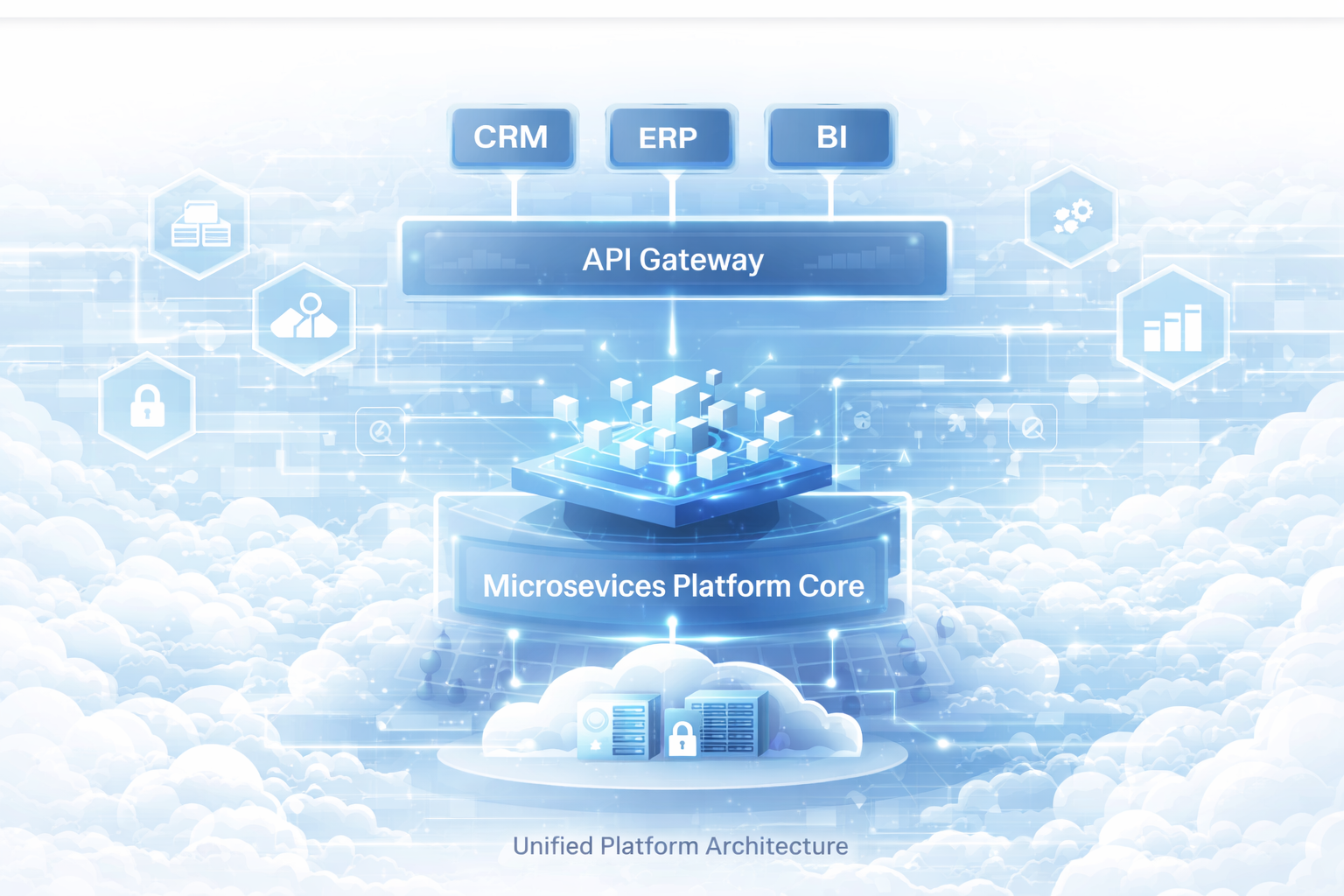
Modular service boundaries with well-defined contracts, domain separation, and fault isolation strategies that reduce interdependency and improve maintainability across complex enterprise systems.
API Gateway & Integration
Secure external connectivity with authentication, policy enforcement, rate limiting, lifecycle versioning, and structured integration patterns for ERPs, identity providers, partner systems, data pipelines, and SaaS ecosystems.
High Availability & Resilience
Redundancy planning, load distribution, failover orchestration, service health validation, and disruption testing designed to protect uptime targets and support enterprise recovery expectations.
Observability & Monitoring
Centralized logging, distributed tracing, telemetry dashboards, and anomaly detection that improve diagnostic visibility, incident response speed, and operational decision-making across live platforms.
Enterprise Platform Governance
Scalable platforms require more than technical capability. Wingskyline incorporates governance models that support release control, architectural consistency, service ownership, access policies, compliance alignment, and operational accountability across growing enterprise ecosystems.
Governance Built into Platform Operations
- Release governance and version control discipline
- Architectural standards across platform domains
- Access governance and identity enforcement models
- Service ownership aligned to operational accountability
- Compliance-aware engineering and change control practices
Structured for Enterprise-Scale Decision Making
Governance is embedded into how platforms are extended, integrated, secured, and modernized. This helps organizations maintain structural discipline while allowing engineering teams to evolve the platform without introducing unmanaged complexity.
Enterprise Integration Readiness
Modern platforms must operate within broader enterprise landscapes. Wingskyline designs integration-ready architectures that support internal systems, external services, partner networks, and evolving data ecosystems without creating structural bottlenecks.
Business System Connectivity
Integration support for ERP platforms, operational systems, internal applications, and line-of-business environments that must exchange data reliably across the enterprise.
Identity & Access Alignment
Platform architectures are designed to integrate with identity providers, SSO frameworks, role-based access models, and enterprise authentication policies for consistent access control.
Data & API Interoperability
Standardized APIs, event-driven interfaces, and structured data exchange patterns help organizations extend platform capabilities while preserving performance, security, and maintainability.
Performance & Optimization
Horizontal auto-scaling, performance profiling, concurrency optimization, workload balancing, and predictive usage modeling are applied to ensure stable platform behavior under fluctuating enterprise demand while maintaining cost-performance efficiency.
Data Infrastructure
Platform data layers are engineered for durability, performance, and recovery readiness through distributed database architectures, read replicas, caching strategies, event streaming, structured backups, and replication controls that support enterprise-grade workload continuity.
Security at Platform Level
Security is embedded at platform level through identity-aware access control, network segmentation, zero-trust communication patterns, infrastructure isolation, and automated compliance validation aligned with enterprise risk and governance requirements.
Platform Lifecycle Ownership
Wingskyline approaches platform engineering as a long-term responsibility rather than a one-time implementation. Our lifecycle model supports architecture stewardship, modernization planning, release discipline, resilience validation, and continuous optimization as product ecosystems evolve.
Long-Term Platform Stewardship
- Architecture stewardship across product and infrastructure evolution
- Versioning discipline and release governance
- Modernization planning without operational disruption
- Observability maturity and resilience validation
- Continuous optimization aligned to growth and usage patterns
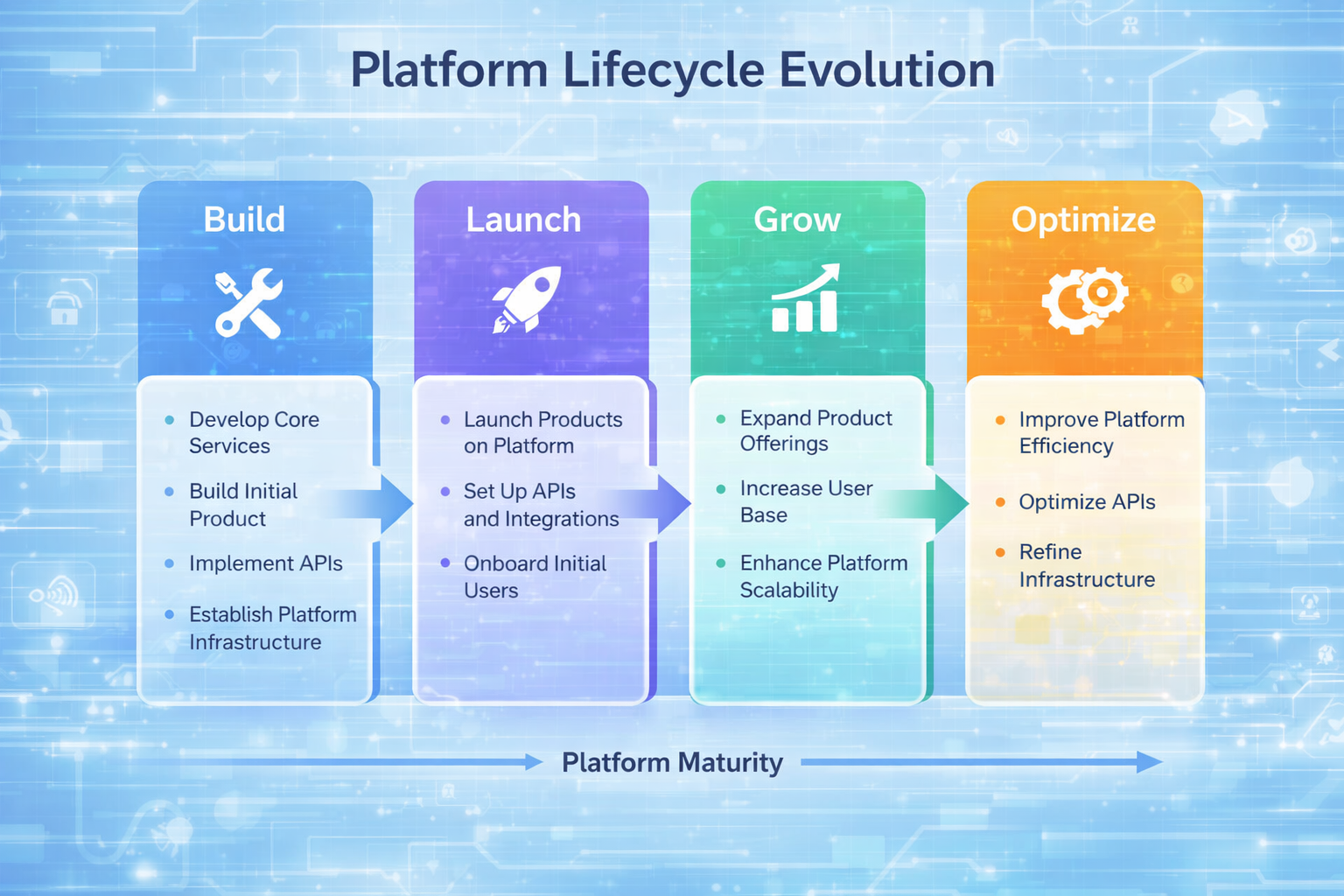
Continuous Platform Evolution
Structured release management, phased rollouts, backward compatibility safeguards, feature flag controls, and rollback mechanisms help preserve stability while platform capabilities expand across products, users, and enterprise workloads.
Stability During Growth
- Phased rollouts and controlled feature release models
- Backward compatibility strategies across dependent services
- Rollback mechanisms for safe production changes
- Refactoring and modernization without platform instability
- Operational continuity during architecture expansion
Built for Long-Term Ecosystem Expansion
Enterprise platforms must continue to support new business requirements without recurring structural reinvention. Wingskyline engineers for controlled adaptability, enabling the platform to extend across future applications, integrations, markets, and operating models.
Need an enterprise platform engineered for global scale?
Let’s architect a secure, observable, integration-ready platform foundation that supports enterprise growth, operational resilience, and long-term product evolution.